Ask any experienced plumbing contractor what single change has most improved their installation workflow in the last five years, and the answer keeps coming back the same: press fit pipe fittings. No flame. No flux. No threading. A permanent, certified, leak-proof joint in under 10 seconds — and no hot-work permit required on site.
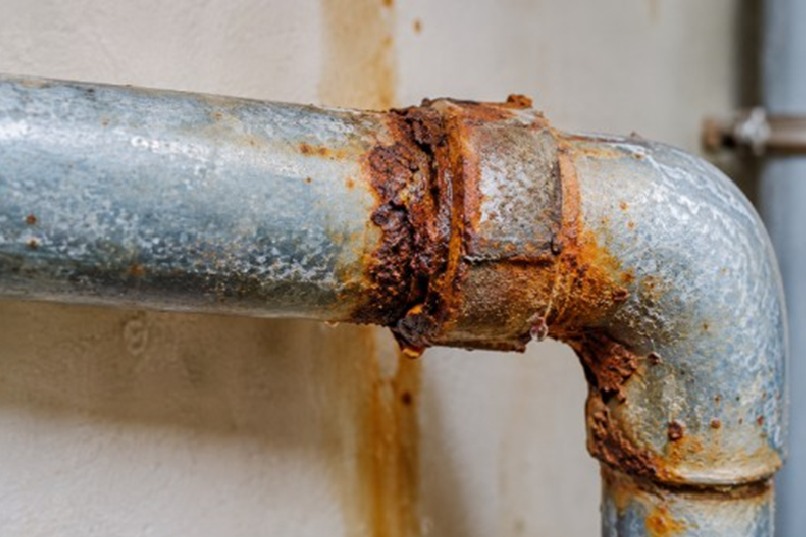
Yet across India, thousands of residential and commercial projects are still being plumbed with GI threading and CPVC solvent cement — methods that are slower, riskier, and produce joints that fail far sooner than the buildings they serve. If you are a plumber, contractor, MEP consultant, or developer who has not yet specified stainless steel press fit pipe fittings on your projects, this guide is for you.
We cover everything — what press fit technology is, how it works, step-by-step installation, common mistakes to avoid, tools required, and how Rhinox India's patented Triple (VV) Press Fittings deliver performance no other press system in India can match.
Quick Answer: Press fit pipe fittings are installed by cutting the SS pipe clean, inserting it fully into the fitting socket, positioning the press tool jaws over the fitting, and squeezing the tool to permanently crimp the joint in under 10 seconds. No welding, soldering, or threading is required. Rhinox India's VV-Press system creates three simultaneous sealing points per connection — the only triple-press fitting manufactured in India, rated up to 25 bar.
What Are Press Fit Pipe Fittings?
Press fit pipe fittings — also called press fittings, push-press fittings, or crimped fittings — are a mechanical pipe joining system that uses a handheld press tool to permanently compress a stainless steel fitting sleeve onto a pipe, creating a watertight seal through a combination of mechanical deformation and an EPDM O-ring gasket. The joint is permanent, requires no heat source, and reaches full working pressure immediately after pressing.
First developed in Europe and now rapidly adopted across India's premium residential, commercial, and industrial construction sector, press fit technology is fundamentally changing how plumbing systems are designed, installed, and maintained. It is the core technology behind the Rhinox Press system — India's most advanced certified SS press plumbing platform.
Press Fit vs Traditional Plumbing Methods — Why It Matters
Before we get into the installation steps, it is worth understanding why press fit is replacing traditional methods on Indian projects:
| Factor | Press Fit (Rhinox) | GI Threading | CPVC Solvent Cement | Copper Soldering |
|---|---|---|---|---|
| Time per joint | Under 10 seconds | 5–15 minutes | 3–5 minutes + cure time | 10–20 minutes |
| Flame / heat required | No — flame-free | No | No | Yes — open flame |
| Hot-work permit | Not required | Not required | Not required | Required |
| Skill required | Low — trainable in hours | High — skilled fitter | Medium | High — skilled solderer |
| Works on wet pipe | Yes | No | No | No |
| Joint strength | Exceeds pipe wall (VV-Press) | Thread-dependent | Cement-dependent | Solder-dependent |
| Installation in occupied buildings | Yes — safe | Yes | Fumes risk | Fire risk |
| Lifespan | 50+ years (SS 316L) | 15–25 years | 20–30 years | 30–50 years |
Read the full technical comparison on the Rhinox System Comparison page to see how press fit stacks up against every traditional plumbing method in detail.
Tools Required for Press Fit Installation
One of the biggest advantages of press fit installation is the simplicity of the toolkit required. Every plumber or contractor needs:
Essential Tools
Press tool (hydraulic or battery-powered): The core tool that crimps the fitting onto the pipe. Rhinox's VV-Press fittings are compatible with standard press tools available across India. Battery-powered press tools — increasingly the norm on large sites — allow uninterrupted operation across multiple floors without power cable constraints.
Pressing jaws (V-jaw and VV-jaw sets): Interchangeable jaw sets sized to match each fitting diameter — typically 15mm, 22mm, 28mm, 35mm, 42mm, 54mm, and up. Rhinox V-Press jaws and VV-Press jaws are not interchangeable with each other — ensure the correct jaw set is selected for the fitting type being installed.
Pipe cutter (rotary or disc type): A clean, square cut is critical to a proper seal. Rotary pipe cutters produce the cleanest cut and are strongly preferred over angle grinders or hacksaws, which can produce uneven cuts and metal debris that damages the O-ring.
Deburring tool / reamer: Removes the internal burr created by pipe cutting. This step is non-negotiable — internal burrs can cut or displace the EPDM O-ring during pipe insertion, causing the joint to fail under pressure testing.
Optional but Recommended Tools
Insertion depth marker / gauge: Marks the correct insertion depth on the pipe before fitting. Prevents under-insertion — the most common cause of press fit joint failure on site.
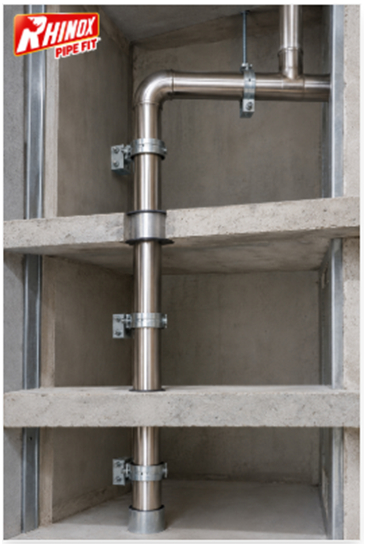
Pipe support brackets and clips: SS press fit systems require correct support spacing to prevent vibration-induced fatigue at joints. Follow the manufacturer's bracket spacing specification for the pipe diameter being installed.
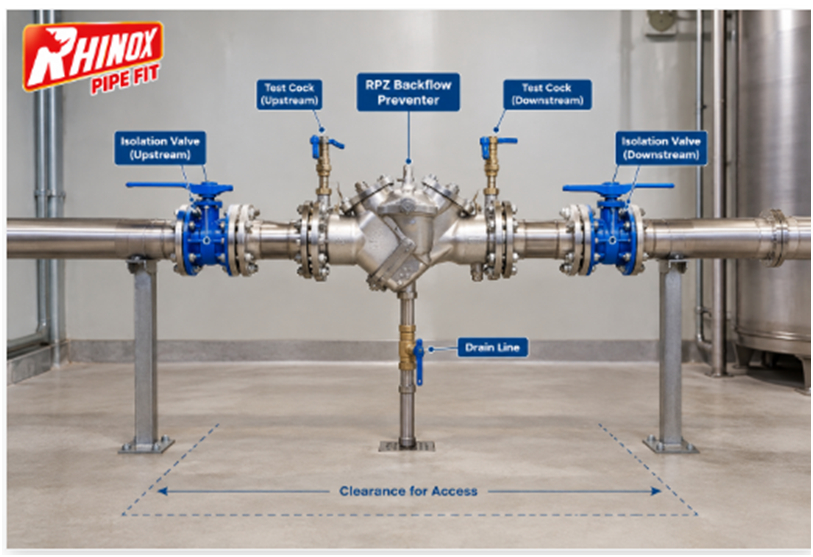
Hydraulic pressure test pump: Used to pressure-test the completed system before handover. The Rhinox VV-Press system includes a built-in smart leak detection feature — unpressed fittings will leak visibly during pressure testing, making missed joints immediately identifiable.
How to Install Press Fit Pipe Fittings — Step-by-Step Guide
Follow these steps for every press fit connection in a stainless steel water supply plumbing system:
Step 1 — Plan the Layout Before Cutting
Before touching a pipe cutter, complete your pipe routing plan. Mark all fitting positions, branch points, and directional changes on the wall or ceiling. This is particularly important in concealed plumbing installations — once pipes are chased into walls, correcting layout errors is expensive and disruptive. A well-planned layout minimises the number of fittings required and reduces total installed cost.
For large residential or commercial projects, Rhinox India's technical team provides complimentary piping circuit design support — including isometric drawing review and fitting count optimisation.
Step 2 — Cut the SS Pipe to Length
Use a rotary pipe cutter sized to the pipe diameter. The cut must be:
Square (perpendicular to the pipe axis): An angled cut prevents the pipe from seating fully in the fitting socket and can compromise the O-ring seal.
Clean and burr-free on the outside: No sharp edges that could damage the fitting O-ring during insertion.
At the correct measured length: Account for the insertion depth into the fitting socket at each end. Rhinox fittings are marked with insertion depth indicators — the pipe must reach these marks for a valid joint.
Do not use angle grinders or hacksaws for cutting SS press pipe — both produce irregular cuts, heat discolouration, and metal particles that contaminate the O-ring seating surface.
Step 3 — Deburr and Clean the Pipe End
After cutting, use a deburring tool or reamer to remove the internal burr at the pipe end. Run the reamer until the bore is smooth and chamfered. Then wipe the outside of the pipe end with a clean cloth to remove any metal particles, cutting oil, or debris. The pipe surface at the insertion zone must be clean and free of scratches that could cut the O-ring.
Pro Tip: On large sites where multiple operatives are cutting pipe, designate one person to cut and deburr all pipe lengths as a batch before the pressing team begins installation. This workflow separation significantly reduces total installation time per floor.
Step 4 — Mark the Insertion Depth
Use an insertion depth gauge or mark the pipe with a permanent marker at the insertion depth for the fitting size being used. Insertion depth varies by pipe diameter — always refer to the Rhinox fitting specification sheet for the correct depth per size. The insertion depth mark is your visual confirmation that the pipe is fully seated before pressing.
Under-insertion is the single most common cause of press fit joint failure. A joint where the pipe is even 2–3mm short of the full insertion depth will fail to compress the O-ring correctly and will leak during pressure testing — or worse, after the system is commissioned.
Step 5 — Insert the Pipe into the Fitting
Push the pipe end fully into the Rhinox fitting socket until the insertion depth mark is flush with — or has disappeared inside — the fitting face. You should feel a slight resistance as the pipe end contacts and compresses the EPDM O-ring inside the socket. This resistance confirms the O-ring is correctly seated.
For Triple (VV) Press Fittings, the pipe must be inserted to the VV-specific insertion depth — slightly deeper than V-Press fittings due to the triple-zone sealing geometry. Never mix VV fittings with V-jaw press tools or vice versa.
Step 6 — Position the Press Tool Jaws
Select the correct jaw size for the fitting being pressed. Mount the jaws onto the press tool head according to the tool manufacturer's instructions. Position the jaws squarely over the fitting at the press zone — the raised collar area of the fitting that indicates the correct crimping position.
Jaws must be centred on the fitting press zone — not on the pipe body or at the fitting edge
Jaws must be square to the fitting axis — not tilted at an angle
Confirm the jaw size matches the fitting nominal size — pressing a 22mm jaw onto a 28mm fitting will produce an incomplete, leak-prone joint
Step 7 — Press the Fitting
Squeeze the press tool trigger and hold it in position through the full press cycle. Most battery press tools complete the full cycle automatically and release when done — you will hear a distinct click or pop indicating the press is complete. Do not release the tool mid-cycle.
For Rhinox VV-Press fittings, the tool completes three sequential crimp zones in a single press cycle — you may hear three distinct pops as each sealing zone is compressed. This is normal and confirms the triple-press geometry has activated correctly.
After pressing, visually inspect the fitting — the press zone should show uniform deformation around the full circumference of the fitting. Any flat spots or uneven crimping indicate a jaw alignment issue and the joint should be cut out and replaced.
Step 8 — Mark and Record Each Pressed Joint
After pressing, mark each completed joint with a chalk pen or paint marker. On large projects, a simple numbering system allows the installation team to track progress and ensure no joint is missed before pressure testing. This is particularly important for concealed plumbing — once walls or ceiling voids are closed, finding an unpressed fitting requires destructive investigation.
Step 9 — Pressure Test the Complete System
Before any concealment of pipes or handover to the client, pressure test the complete installation using a hydraulic test pump. Fill the system with water, purge all air, and pressurise to 1.5 times the maximum working pressure for a minimum of 30 minutes. Record the test pressure, start time, end time, and temperature.
The Rhinox VV-Press system includes a built-in smart leak detection feature: any fitting that was not pressed will leak visibly during the pressure test — making missed connections instantly identifiable without any additional testing equipment. This is a significant safety advantage over traditional systems where missed solder joints or loose threads may not leak until the system is under full working pressure after commissioning.
Important: Always complete pressure testing before tiling, plastering, or any other surface finishing over concealed pipe runs. Repair costs for accessing a failed joint behind tiles are many times the cost of the joint itself.
Rhinox VV-Press vs Standard V-Press — Which Should You Specify?
Rhinox India manufactures two press fitting systems — and the choice between them depends on the pressure zone and building type:
| Specification | Double (V) Press Fittings | Triple (VV) Press Fittings |
|---|---|---|
| Press Points Per Joint | 2 simultaneous sealing points | 3 simultaneous sealing points (patented) |
| Max Working Pressure | Up to 16 bar | Up to 25 bar |
| Best For | Residential apartments, hotels, hospitals — standard pressure zones | High-rise towers, commercial complexes, fire systems — high-pressure zones |
| Vibration Resistance | High | Superior — triple-zone geometry distributes load evenly |
| Smart Leak Detection | Yes | Yes |
| Patent Status | Standard press technology | World-first patented — no equivalent from any other Indian manufacturer |
| Grades Available | SS 304 / SS 316 | SS 304 / SS 316 |
| Size Range | 15 NB to 108 NB | 15 NB to 108 NB |
10 Common Press Fit Installation Mistakes — and How to Avoid Them
Even experienced plumbing teams make errors when transitioning from traditional methods to press fit. Here are the most common mistakes seen on Indian job sites — and how the Rhinox system is designed to prevent them:
1. Not Deburring the Pipe End
A sharp internal burr on the cut pipe end will cut or displace the EPDM O-ring during insertion — creating a joint that appears visually correct but will fail under pressure. Always deburr every cut end before insertion, no exceptions.
2. Under-Insertion of the Pipe
The pipe must reach the full insertion depth mark for the O-ring to compress correctly. Partial insertion looks like a complete joint until pressure testing — always use an insertion depth gauge and verify the mark is flush with the fitting face.
3. Wrong Jaw Size
Using a 22mm jaw on a 28mm fitting produces a partial crimp that looks pressed but has insufficient O-ring compression. Always double-check jaw size against fitting size before pressing. Label your jaw sets clearly on large sites with multiple operatives.
4. Mixing V-Press and VV-Press Jaws
Rhinox V-Press (Double) and VV-Press (Triple) fittings use different jaw profiles. Using V-jaws on VV fittings will not create the correct triple-press geometry and will produce an invalid joint. Always ensure jaw type matches fitting type.
5. Angled or Off-Centre Jaw Positioning
Jaws positioned at an angle or off-centre on the fitting press zone produce uneven crimping — visible as flat spots on the fitting after pressing. Any fitting showing uneven crimp deformation must be cut out and replaced, not re-pressed.
6. Cutting Pipe with an Angle Grinder
Angle grinder cuts produce excessive heat, introduce metal particles into the pipe bore, and rarely produce a square cut. All three outcomes damage the O-ring seating surface. Always use a rotary pipe cutter for SS press pipe.
7. Pressing on a Wet Pipe Without Inspection
One genuine advantage of press fit over soldering is that it works on wet pipes — but only if the pipe surface at the insertion zone is clean. Water, grease, or debris on the pipe exterior at the press zone can prevent full jaw contact. Wipe the pipe surface before pressing even on wet installations.
8. Skipping Pressure Testing Before Concealment
This is the most expensive mistake on any project. Never tile, plaster, or close ceiling voids over unpressure-tested pipe runs. The Rhinox smart leak detection feature makes pre-concealment testing fast and reliable — use it every time.
9. Using Non-Compatible Pipe with Rhinox Fittings
Rhinox press fittings are designed for use with Rhinox stainless steel pipes — manufactured to matching outside diameter tolerances and wall thickness specifications. Using non-Rhinox pipe with Rhinox fittings risks dimensional mismatch that can produce incomplete sealing even when the joint appears visually correct. Always use the complete Rhinox system for a certified, warranted installation.
10. Not Recording the Pressure Test
A pressure test that is not documented — test pressure, start time, end time, temperature, and pass/fail result — is legally worthless for handover. Always record your pressure test data on a signed handover sheet and provide it to the client or building owner as part of the as-built documentation.
Press Fit Pipe Fittings for Different Applications — What to Specify
Residential Apartments and Villas
For standard residential cold and hot water supply, the Rhinox Double (V) Press Fittings in SS 316L grade are the correct specification. Size 15 NB branch lines to fixtures, 22–28 NB bathroom risers, 28–42 NB main distribution. Full flame-free installation makes these ideal for occupied renovation projects where resident safety and disruption minimisation are critical.
High-Rise Towers (20+ Floors)
Specify Rhinox Triple (VV) Press Fittings for all high-pressure zone risers and distribution in multi-storey towers. The 25-bar pressure rating and triple-seal geometry are designed specifically for the pressure demands of high-rise water supply systems — pressure zones that exceed the capability of standard V-Press or GI systems.
Hospitals and Healthcare
Potable water lines and sterile water supply in healthcare facilities require SS 316L grade, EPDM-sealed press fittings with zero risk of contamination. Rhinox's food-grade SS 316L material and certified EPDM O-rings meet all applicable hygiene standards. The flame-free installation method is essential in occupied hospital environments where fire risk cannot be tolerated.
Fire Fighting and Sprinkler Systems
SS press fittings — particularly the VV-Press range rated at 25 bar — are suitable for fire fighting wet and dry riser installations. SS 316L is non-reactive with fire suppressants and maintains structural integrity under extreme heat. See our dedicated blog on SS pipes for fire fighting systems for full specification guidance.
HVAC Chilled Water and Heating Systems
Press fit SS fittings are fully compatible with chilled water, heating hot water, and condenser water systems in commercial HVAC installations. The temperature range of -20°C to +120°C standard covers all HVAC operating conditions, and the flame-free installation is essential in occupied commercial buildings where hot-work permit delays add significant project time. Rhinox MLC composite pipes pair with the same press fitting system for underfloor heating and flexible routing applications.
Why Rhinox India Press Fittings — The Contractor's Perspective
Across India, plumbing contractors and MEP consultants who have specified the Rhinox Press system consistently report the same outcomes:
60% reduction in installation time versus GI threading on equivalent floor areas — fewer operatives required, faster floor completion, and reduced project programme risk
Zero hot-work permits on site — eliminating the administrative burden and safety risk of open-flame operations in multi-storey buildings
Zero callbacks on properly installed Rhinox systems — press fit joints that pass the pressure test are permanent and do not loosen, corrode, or fail over time
Trainable workforce — operatives can be trained to press fit standard correctly in a single half-day session, dramatically reducing dependence on scarce skilled GI fitters or copper solderers
Complete system supply — Rhinox India provides pipes, fittings, design support, and installation training under a single quality-assured brand, simplifying procurement and ensuring system-level compatibility
Visit the Rhinox Advantage page for the full list of technical and commercial benefits of specifying the Rhinox Press system on your next project.
Frequently Asked Questions — Press Fit Pipe Fittings Installation
Can press fit fittings be installed on wet pipes?
Yes — one of the key advantages of press fit over soldering and solvent cement is that joints can be made on wet pipes. The mechanical crimping process does not depend on a dry, flux-coated surface the way soldering does. However, the pipe exterior at the pressing zone should be wiped clean of heavy contamination before pressing to ensure proper jaw contact. Rhinox press fittings are designed for use in live plumbing renovation and repair scenarios where draining the system is impractical.
Can press fit pipe fittings be removed or re-used?
No. Press fit fittings create a permanent, irreversible joint — the fitting cannot be removed and re-used after pressing. If a fitting needs to be relocated or a pipe run rerouted, the fitting must be cut out and replaced with a new fitting. This is by design — the permanent joint is what delivers the long-term leak-free performance of the press fit system. Always plan pipe layouts carefully before pressing to avoid unnecessary re-work.
How do I know if a press fit joint has been properly pressed?
A correctly pressed Rhinox fitting will show uniform deformation around the full circumference of the press zone — the collar of the fitting will be visibly compressed in a consistent ring. Rhinox's smart leak detection feature provides additional confirmation during pressure testing: any unpressed fitting will leak during the hydraulic test, making missed connections immediately identifiable. Any joint showing uneven deformation, flat spots, or visible cracking must be replaced.
What pipe do Rhinox press fittings work with?
Rhinox press fittings are engineered for use with Rhinox stainless steel pipes manufactured to matching outside diameter and wall thickness tolerances. Using third-party pipe with Rhinox fittings risks dimensional mismatch. For Rhinox MLC composite pipes, the same press fitting system applies. Contact our technical team for guidance on compatibility with specific pipe specifications.
What is the difference between V-Press and VV-Press installation?
The installation process is essentially identical for both systems — cut, deburr, mark, insert, position jaws, press. The key difference is the jaw set used and the number of sealing zones created. V-Press uses dual-groove jaws to create 2 sealing points. VV-Press uses triple-groove jaws to create 3 simultaneous sealing points. The VV-Press jaw set must not be used with V-Press fittings, and vice versa. See the Rhinox system comparison for the full technical breakdown.
Do press fit fittings require any maintenance after installation?
No. A correctly pressed Rhinox SS fitting requires zero maintenance throughout its service life. The permanent mechanical joint and EPDM O-ring seal are designed to perform for 50+ years without inspection, lubrication, tightening, or replacement — unlike threaded GI fittings that can loosen over time or CPVC joints that can degrade from thermal cycling. This zero-maintenance profile is one of the key reasons Rhinox India's sustainable plumbing systems are increasingly specified for green-rated and smart-city projects.
Where can I get training on Rhinox press fit installation in India?
Rhinox India provides contractor installation training for the full Rhinox Press system. Training covers correct cutting, deburring, insertion, pressing, and pressure testing procedures for both V-Press and VV-Press fittings. Contact the Rhinox technical team at 1800-120-6232 or visit the Rhinox Support page to arrange training for your installation team.
Get Started with Rhinox Press Fit Pipe Fittings
If you are ready to move your projects to press fit installation — or want to understand how the Rhinox system compares to what you are currently specifying — Rhinox India's technical team is available to support you at every stage.
From initial specification and layout design to product supply, contractor training, and on-site technical support, Rhinox India's one-stop plumbing service covers your project from pipe to handover certificate.
Toll Free: 1800-120-6232
Email: contact@rhinoxindia.com
Technical Support: rhinoxindia.com/support
Office: 524, Phase-5, Udyog Vihar, Sector-19, Gurugram – 122008, Haryana, India
Explore the complete Rhinox product range: Double (V) Press Fittings — Triple (VV) Press Fittings — SS Pipes — MLC Pipes — Brass Press Fittings