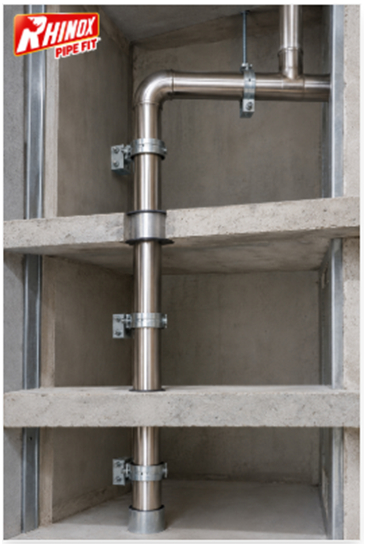
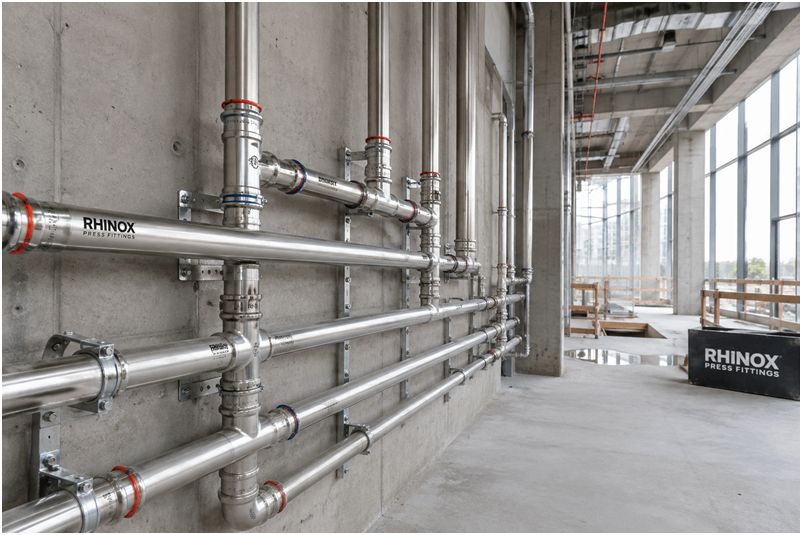
Most plumbing failures do not happen because of bad design. They happen because the pipe material was never built to survive the water, pressure, or years it was asked to handle. A stainless steel plumbing system solves that problem at the material level, which is why it has become the default choice for architects and builders who want to stop thinking about pipes once the walls close up.
This guide covers what makes up a stainless steel plumbing system, where it fits best in modern buildings, and how to select the right components for your project.
What Is a Stainless Steel Plumbing System?
A stainless steel plumbing system is a complete water distribution setup built from stainless steel pipes, matched press fittings, and compatible accessories, engineered to move potable water, hot water, or fire-fighting supply without corroding, leaching, or degrading over time. The system relies on mechanical press-fit joints rather than welding or threading for most installation work.
What Components Make Up the Full System?
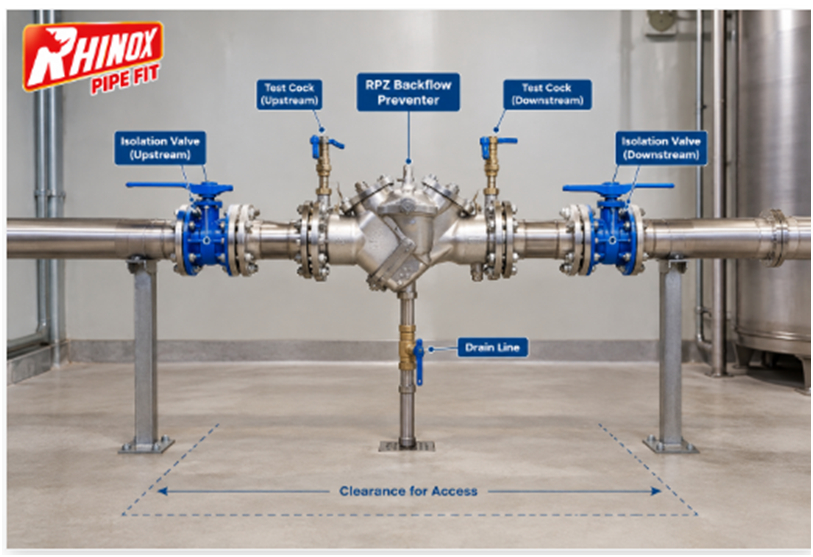
A stainless steel plumbing system is more than just pipe in the wall. Every component in the chain needs to match the same performance standard, or the system's overall reliability drops to its weakest link.
- Stainless steel pipes, typically manufactured in EN 1.4404 (316L) grade
- Double or Triple press fittings that create the sealed joints
- Valves, unions, and adapters rated for the same pressure class
- Wall brackets and clamps designed for the specific pipe diameter
- Transition fittings where the system meets other pipe materials
- Pressure test equipment used to verify every joint before closing walls
- Documentation and batch traceability for warranty and compliance records
Treating the system as a matched set, not a collection of individually sourced parts, is what actually delivers the long-term reliability stainless steel is known for.
Why Do Modern Buildings Choose Stainless Steel Plumbing Pipes?
Modern buildings choose stainless steel plumbing pipes because the material resists corrosion, does not react with treated municipal water, and holds up under the pressure and temperature swings common in high-rise and commercial systems. Unlike GI or carbon steel, stainless steel forms a self-repairing chromium oxide layer that keeps chlorinated water from causing internal rust.
What Problems Does Stainless Steel Actually Solve?
Every alternative pipe material carries a known weakness that shows up over years of daily use. Stainless steel was adopted specifically because it removes these weaknesses at the source.
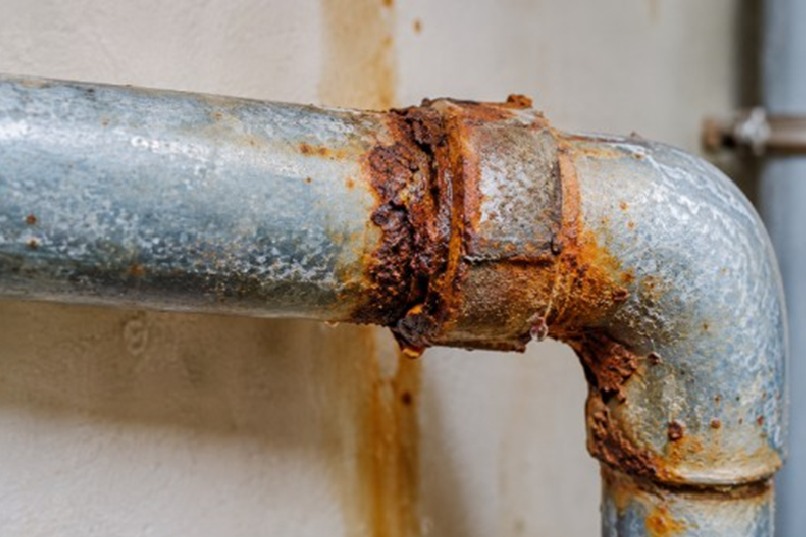
- GI pipes corrode internally, releasing rust and zinc into water over time
- Copper pipes can dissolve trace copper ions into the water supply
- CPVC and uPVC pipes may leach compounds when carrying hot water
- Carbon steel pipes are unsuitable for potable water due to fast corrosion
- Chlorinated municipal water accelerates degradation in non-stainless materials
- Stainless steel's oxide layer resists chloride pitting in 316L grade specifically
- Smooth internal bore limits scale buildup and bacterial biofilm formation
None of this means other materials are unusable everywhere, but for potable water carrying chlorinated municipal supply, stainless steel removes a category of failure that other pipe materials simply cannot avoid. Material choice sits within the broader framework the WHO Guidelines for Drinking-water Quality set out for protecting water safety from source to tap, which is why chemically inert materials are increasingly preferred for distribution infrastructure.
Where Do Stainless Steel Plumbing Systems Get Used?
Stainless steel plumbing systems get used in residential high-rises, commercial buildings, hospitals, hospitality projects, and fire-fighting infrastructure, anywhere hygiene, pressure reliability, or long service life outweigh upfront material cost. Hospitals and food processing facilities in particular favor stainless steel because the material meets strict hygiene requirements without special coatings.
Which Building Types Benefit Most?
Not every project needs the same plumbing specification, but certain building types consistently gain the most from a stainless steel system.
| Feature | Residential High-Rise | Commercial/Hospitality | Hospital/Healthcare |
| Primary concern | Long-term reliability | Guest-facing hygiene | Strict contamination control |
| Pressure demands | Moderate to high | Moderate | High, redundant systems |
| Maintenance access | Limited, concealed runs | Limited during operation | Extremely limited |
| Hygiene standard | Standard potable water | Elevated for guest trust | Highest, clinical-grade |
| Best fit | Concealed riser systems | Visible and concealed runs | Fully concealed, tested runs |
Fire-fighting systems also rely heavily on stainless steel piping, since the material holds up under the pressure testing and long idle periods that fire suppression infrastructure requires.
How Does a Stainless Steel Plumbing System Get Installed?
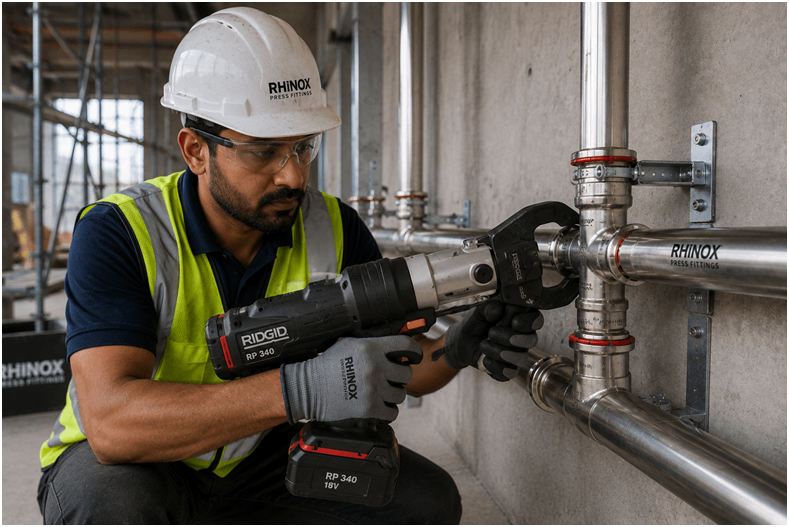
A stainless steel plumbing system gets installed using press-fit technology, where a hydraulic press tool compresses a fitting collar around the pipe to create a permanent, sealed joint. This method removes the need for welding, threading, or soldering, which speeds up installation and eliminates fire risk on site.
What Does the Installation Process Actually Involve?
Understanding the installation sequence helps project teams plan timelines accurately and avoid the common mistakes that lead to failed pressure tests later.
- Cut pipe to length using a proper pipe cutter, never a grinder
- Deburr the cut edge to protect the fitting's internal O-ring
- Mark insertion depth to confirm the pipe seats fully in the fitting
- Insert the pipe into the fitting until it reaches the internal stop
- Press the joint using a calibrated jaw matched to the fitting size
- Verify the pressed profile visually against the manufacturer's reference
- Pressure test the full system before closing any wall or ceiling
Rhinox's Double (V) and Triple (VV) Press Fittings are designed specifically for this flame-free installation method, allowing plumbers to complete a joint in seconds rather than the minutes required for welded or threaded connections.
Stainless Steel vs. Copper vs. GI: How Do Plumbing Materials Compare?
Stainless steel plumbing pipes offer stronger corrosion resistance than copper and significantly outperform GI pipes on both longevity and water hygiene. Copper remains a workable option for smaller residential jobs, while GI pipes are increasingly being phased out of new construction due to well-documented internal rusting over time.
What Do the Numbers Actually Show?
A side-by-side comparison makes the trade-offs clear, especially for specifiers weighing upfront cost against total lifecycle value.
| Feature | Stainless Steel | Copper | GI (Galvanised Iron) |
| Corrosion resistance | Excellent, self-repairing oxide layer | Good, but leaches trace copper | Poor, corrodes internally over time |
| Hygiene for potable water | Chemically inert | Generally safe, some leaching | Risk of rust and zinc contamination |
| Installation method | Press-fit, flame-free | Soldering or press-fit | Threading |
| Typical lifecycle | Long-term, low maintenance | Moderate, depends on water quality | Shorter, prone to early replacement |
| Cost profile | Higher upfront, lower lifecycle cost | Moderate upfront cost | Lower upfront, higher long-term cost |
The right material ultimately depends on project budget, building type, and how much the client values reducing future maintenance disruption. For projects prioritizing water hygiene and reduced long-term intervention, stainless steel remains the stronger specification.
What Should You Check Before Choosing a Stainless Steel Plumbing System?
Before choosing a stainless steel plumbing system, check the stated grade (316L is the recommended standard for potable water), verify pressure and temperature ratings, and confirm the pipes and fittings come from the same manufacturer for guaranteed compatibility. Mixing components from different sources can compromise the seal integrity that makes press-fit systems reliable.
What Belongs on Your Selection Checklist?
A structured checklist keeps specifiers from missing a detail that only becomes visible once the system is already behind a wall.
- Confirm the stainless steel grade, ideally 316L for potable water use
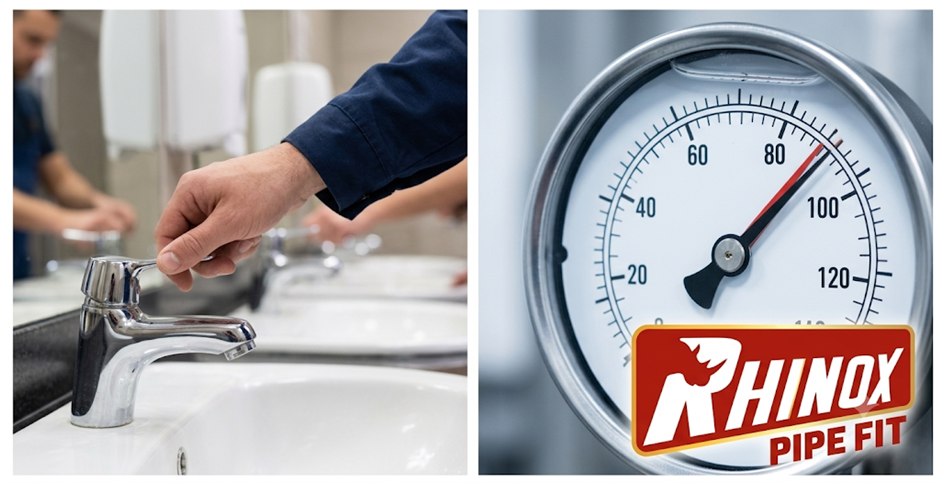
- Check pressure and temperature ratings against your project's demands
- Verify pipe and fitting compatibility from the same manufacturer system
- Review welding method, since autogenous TIG welding improves seam quality
- Ask for batch traceability and manufacturing documentation
- Confirm available sizes match your project's full diameter range
- Request pressure test data or references from comparable past projects
A system that checks every item here is one your project team can specify with confidence, without second-guessing decisions once construction is underway.
Rhinox India's Stainless Steel Pipes are manufactured in EN 1.4404 (316L) grade using autogenous TIG longitudinal welding, available across DN15 to DN100 sizes, giving specifiers a documented, traceable option for potable water and fire-fighting applications alike.
Frequently Asked Questions
Is stainless steel plumbing more expensive than copper or PVC? Stainless steel typically carries a higher upfront material cost than GI or PVC, though the lower maintenance and replacement frequency over the system's service life often offsets that difference for larger or long-term projects.
What grade of stainless steel is best for water pipes? Grade 316L is widely recommended for potable water plumbing because its added molybdenum content improves resistance to chloride pitting, which is particularly relevant in areas with hard or chlorinated water supply.
Can stainless steel pipes be used for hot water systems? Yes, stainless steel handles hot water systems well, since it does not degrade or leach compounds at elevated temperatures the way some plastic pipe materials can under sustained heat exposure.
Do stainless steel plumbing systems need welding during installation? Most modern stainless steel plumbing installations use press-fit technology instead of welding, which allows flame-free installation and faster project timelines without compromising joint strength.
How long does a stainless steel plumbing system typically last? Stainless steel is engineered for long-term, low-maintenance performance, often serving buildings for decades without the internal corrosion issues that shorten the service life of GI or lower-grade steel pipes.
Is stainless steel plumbing suitable for residential projects, or only commercial ones? Stainless steel works well for both. Many homeowners choose it during renovation specifically to eliminate recurring GI pipe corrosion issues, while commercial and healthcare projects favor it for hygiene and reliability at scale.
The Bottom Line
A stainless steel plumbing system earns its place in modern construction by removing the corrosion, leaching, and hygiene risks that shorten the service life of other pipe materials. Choosing matched pipes and fittings, verifying the correct grade, and following proper press-fit installation are what actually deliver the reliability the material is known for.
Explore Rhinox India's Stainless Steel Pipes and Press Fittings, or call the technical support line at 1800-120-6232 to discuss the right specification for your next project.