Not every metal tube behaves the same way once water starts moving through it under pressure, year after year. Stainless steel tubes for plumbing exist because other materials, from galvanised iron to plain carbon steel, all eventually fail at the one job that matters most: keeping water clean and the joint sealed.
This guide covers where stainless steel tubes are used, which grade actually matters for water supply, and how to select the right specification for your project.
What Are Stainless Steel Tubes for Plumbing?
Stainless steel tubes for plumbing are precision-manufactured tubes made from chromium-nickel alloy steel, engineered to carry potable water, hot water, and fire-fighting supply without corroding or affecting water quality. Unlike standard carbon steel pipe, the added chromium content forms a passive oxide layer that resists rust and chemical attack from treated municipal water.
What Makes the Tube Itself Different From Ordinary Steel Pipe?
The performance difference between stainless steel and ordinary steel pipe comes down to alloy composition, not just wall thickness or manufacturing quality.
- Chromium content forms a self-repairing protective oxide layer
- Molybdenum addition in 316L grade improves chloride resistance further
- Low carbon content in the "L" designation reduces weld-area corrosion
- Precision manufacturing keeps wall thickness consistent along the length
- Smooth internal bore limits scale buildup over years of use
- Thin-wall tubes weigh notably less than equivalent GI or copper
- Full recyclability supports green building certification requirements
Every one of these properties traces back to the same source: the alloy itself, not a coating that can wear off over time.
What Grades of Stainless Steel Tubes Matter for Water Supply?
Grade 316L (EN 1.4404) is the grade that matters most for stainless steel tubes used in water supply plumbing, since its added molybdenum content improves resistance to chloride pitting from chlorinated municipal water. Grade 304 is used in some applications but offers less protection in hard water or coastal regions where chloride exposure is higher.
How Do These Grades Actually Differ in Practice?
Grade selection is not a minor spec detail. It directly affects how the tube performs over decades of exposure to treated water.
- 316L adds roughly 2 to 3 percent molybdenum over 304 grade
- Molybdenum specifically targets resistance to chloride pitting corrosion
- 316L suits coastal cities and hard water zones especially well
- 304 grade remains common in general industrial, non-potable applications
- Lower carbon content in "L" grades reduces corrosion near weld seams
- Rhinox India manufactures its water supply tubes exclusively in 316L
- Grade selection should always match the specific water chemistry involved
For any project carrying drinking water through Indian municipal supply, 316L is the grade plumbing engineers consistently recommend, precisely because chlorination is standard practice across most cities.
Where Do Stainless Steel Tube Applications Show Up in Real Projects?
Stainless steel tube applications span residential plumbing, high-rise water risers, hospital and food-processing hygiene systems, and fire-fighting infrastructure. Each application draws on a different strength of the material, whether that is corrosion resistance, hygiene, or the ability to withstand sustained pressure over long service intervals.
Which Industries Rely on Stainless Steel Tubes Most?
Certain sectors have adopted stainless steel tubes specifically because the consequences of pipe failure are more serious than in typical residential settings.
- Hospitals require contamination-free water for patient safety compliance
- Food and beverage plants need hygienic, easy-to-clean tube surfaces
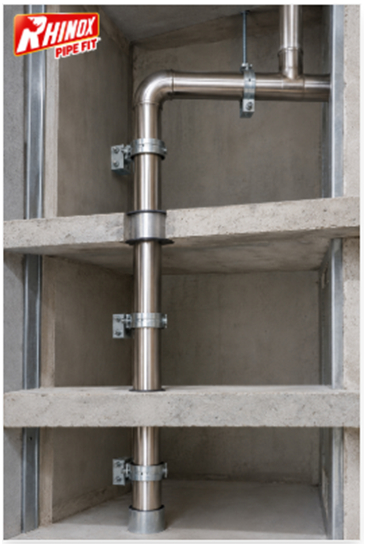
- High-rise buildings depend on pressure-stable risers across many floors
- Fire-fighting systems need tubes that perform after long idle periods
- Hospitality projects value both hygiene and long-term guest trust
- Desalination and water treatment plants require corrosion-resistant infrastructure
- Pharmaceutical facilities rely on the same food-grade material standard
Explore how Rhinox India's Stainless Steel Pipes serve exactly these sectors, manufactured to the same 316L specification across every application, from a single apartment riser to a full hospital wing.
Stainless Steel Tubes vs. GI Pipes for Water Supply: What's the Difference?
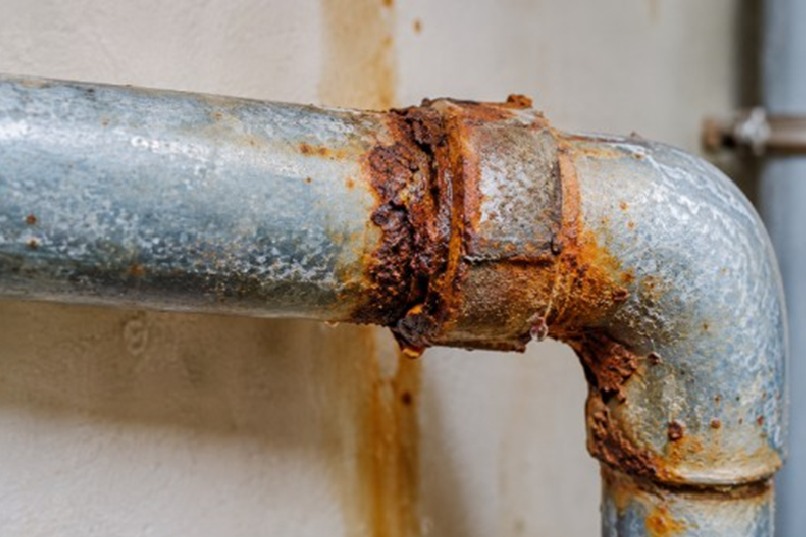
Stainless steel tubes resist corrosion through their chromium oxide layer, while GI pipes rely on a zinc coating that wears away over years of use, especially in chlorinated water. Once that zinc coating degrades, GI pipes begin corroding internally, which is the primary reason many Indian plumbing engineers now specify stainless steel for new construction.
How Do the Two Materials Actually Compare Long-Term?
A side-by-side look at how each material performs over a typical building's service life makes the practical difference clear.
| Feature | Stainless Steel Tubes | GI Pipes |
| Corrosion protection | Self-repairing oxide layer | Zinc coating, wears over time |
| Water hygiene | Chemically inert, no leaching | Rust and zinc can enter water |
| Maintenance needed | Minimal, no surface treatment | Periodic anti-corrosion treatment |
| Typical service life | Long-term, low corrosion per grade 316L properties | Often replaced within 15–25 years |
| Installation method | Flame-free press-fit jointing | Threaded connections |
| Weight | Lighter for equivalent size | Heavier, thicker wall needed |
GI pipes remain common in older Indian buildings, but for any new water supply installation, the maintenance savings and hygiene benefits of stainless steel typically outweigh the higher upfront material cost.
Do Stainless Steel Tubes Meet Indian Manufacturing Standards?
Yes, stainless steel tubes for hygienic water and beverage applications in India are governed by IS 6913, the Bureau of Indian Standards specification covering stainless steel tubes for the food, beverage, dairy, and pharmaceutical industries, alongside the international EN 10312 standard for stainless steel tubes in water supply. These standards confirm the tube's material composition, hygienic surface finish, and dimensional accuracy for applications where water and consumable liquids come into direct contact with the tube.
What Should Compliance Documentation Actually Include?
Standards compliance is only meaningful when it comes with documentation you can verify, not just a claim printed on packaging.
- Confirm the tube is certified under the relevant BIS specification for its use case
- Ask for material certification matching EN 1.4404 (316L) specification
- Request hydraulic pressure testing records from the manufacturer
- Check for eddy current inspection data confirming weld integrity
- Verify dimensional tolerances match the stated size specification
- Look for batch traceability tied to the manufacturing date
- Confirm the manufacturer discloses testing methodology, not just results
Rhinox India's stainless steel tubes are manufactured to EN 1.4404 (316L) material certification and validated through hydraulic pressure testing and eddy current inspection, giving specifiers documentation they can verify rather than take on faith. Ask your Rhinox representative which specific BIS or EN standard applies to your project's exact application, since requirements can vary between general plumbing and food-grade or pharmaceutical use. The Bureau of Indian Standards' IS 6913 specification is publicly archived and confirms the exact scope this standard covers.
How Do You Select the Right Stainless Steel Tube Size for Your Project?
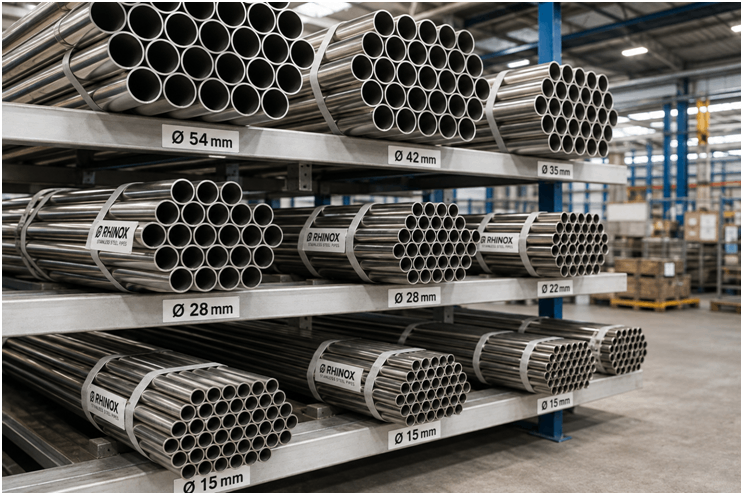
Select stainless steel tube size based on the flow rate your system needs, the number of fixtures served, and the building's overall pressure requirements. Rhinox India's tubes are available across 8 sizes from DN15 (15mm OD) to DN100 (108mm OD), covering everything from a single bathroom line to a full building riser.
What Factors Actually Drive the Sizing Decision?
Undersizing a tube restricts flow and pressure, while oversizing adds unnecessary material cost. Getting this right requires a few specific inputs from your project plan.
- Count total fixtures served by each branch line in the system
- Calculate expected peak flow rate for that branch during use
- Factor in building height, since taller risers need higher pressure tolerance
- Match tube size to the connecting fitting's compatible diameter range
- Review local plumbing code minimums for the fixture types involved
- Consult manufacturer sizing charts rather than estimating by eye
- Plan for future fixture additions where feasible during initial design
Getting the sizing conversation right at the design stage avoids the costly rework that comes from realizing a riser cannot support actual building demand.
What Should You Check Before Buying Stainless Steel Tubes for Plumbing?
Before buying stainless steel tubes for plumbing, check the grade, standard compliance, wall thickness, and whether the manufacturer supplies matched press fittings for the same size range. Mixing tubes and fittings from different manufacturers can compromise the sealed joint that makes press-fit systems reliable in the first place.
What Belongs on a Buyer's Checklist?
A short but specific checklist protects a project from the most common and costly sourcing mistakes.
- Confirm grade is 316L for any potable water application specifically
- Verify EN 1.4404 (316L) material certification documentation is available
- Check that matched press fittings exist for your chosen tube size
- Ask about maximum temperature rating, since fittings vary by type
- Request installation training or support for on-site plumbing teams
- Compare standard length options against your project's layout needs
- Confirm after-sales support is available for warranty-related questions
Rhinox India backs its stainless steel tube and fitting system with on-site installer training and technical support, so specification decisions made on paper hold up once installation actually begins.
Frequently Asked Questions
What is the difference between a stainless steel pipe and a stainless steel tube? The terms are often used interchangeably in plumbing, though "pipe" traditionally refers to nominal bore sizing while "tube" refers to precise outer diameter sizing. Rhinox specifies tubes by exact outer diameter across its DN15 to DN100 range.
Can stainless steel tubes be used for hot water plumbing? Yes, stainless steel tubes handle hot water reliably, since the material does not degrade or leach compounds at elevated temperatures the way some plastic materials can under sustained heat.
What sizes do stainless steel tubes come in? Rhinox India's stainless steel tubes are available in 8 sizes from DN15 (15mm outer diameter) to DN100 (108mm outer diameter), supplied in standard 6-metre lengths for most projects.
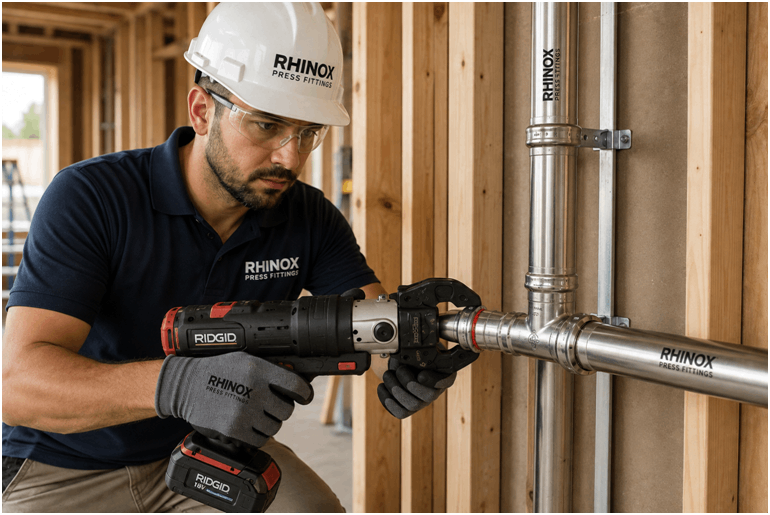
Do stainless steel tubes need welding for installation? No, most modern stainless steel plumbing systems use flame-free press-fit technology instead of welding, using a hydraulic press tool to create a permanent, tamper-proof joint in seconds.
Are stainless steel tubes more expensive than GI pipes? Stainless steel typically costs more upfront than GI, though the reduced maintenance, corrosion-related replacement, and water quality risk over the system's service life often make the total lifecycle cost more favorable.
Is stainless steel tubing safe for drinking water? Yes, when manufactured to food-grade 316L specification, stainless steel tubes are considered safe and hygienic for potable water applications across residential and commercial projects. Tubes intended for food, beverage, dairy, or pharmaceutical contact in India are certified under IS 6913, the relevant Bureau of Indian Standards specification for that hygienic-grade use case.
The Bottom Line
Stainless steel tubes for plumbing solve a problem other materials cannot: corrosion and water contamination risk that builds up quietly over years of daily use. Choosing the right grade, verifying standards compliance, and sizing the system correctly are what actually deliver the reliability the material is known for.
Explore Rhinox India's Stainless Steel Pipes and matched Press Fittings, or call the technical support line at 1800-120-6232 to get sizing help for your next project.