A clean water main can still deliver unsafe water if flow reverses inside the building. Backflow prevention in plumbing systems stops that reversal before it reaches drinking-water lines. In a hotel, hospital, or tower, one unprotected connection can put a whole riser at risk.
This guide covers causes, device types, and design checks for contractors, MEP consultants, and facility teams.
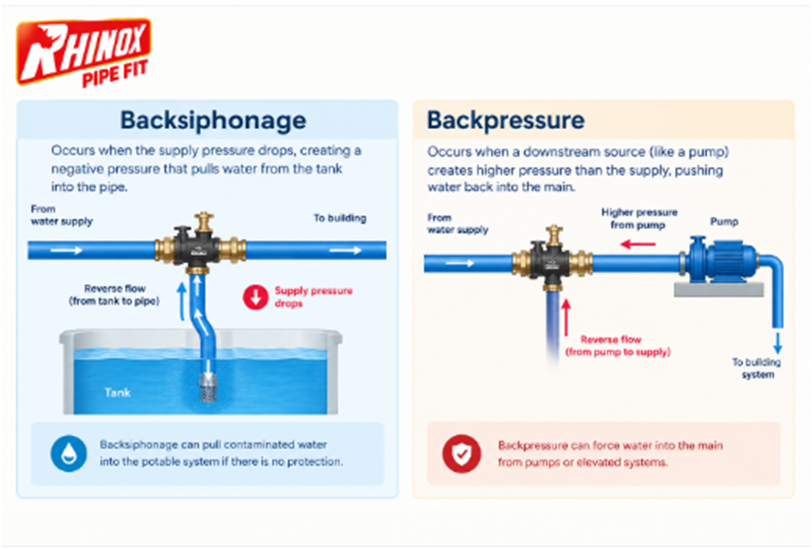
Quick Answer: Backflow is the unwanted reverse flow of water or another fluid into a clean supply line. It happens through backsiphonage (supply pressure drops) or backpressure (downstream pressure exceeds supply). Prevention combines three steps: remove or isolate cross-connections, fit a backflow preventer matched to the hazard, and test devices as local rules require.
What Causes Backflow in Potable Water Systems?
Backflow needs two things: a link between clean and non-clean water, and a pressure change that reverses flow. The link is called a cross-connection. The pressure change comes from either backsiphonage or backpressure. Even a hose left in a tank can complete the path. National Building Code 2016, Part 9 expects potable supply to be protected from backflow hazards, so this is a design duty, not an optional extra.
How Do Backsiphonage and Backpressure Differ?
- Pipe bursts or pump failure can suddenly drop supply pressure.
- Heavy fire-fighting draw can create negative pressure upstream.
- Booster pumps can push pressure above the incoming supply.
- Heated boiler systems can build pressure back toward the supply.
- Elevated equipment can force non-potable fluid upstream.
Know which condition applies at each point, because it decides which device is allowed.
Where Do Cross-Connections Hide in Commercial Buildings?
Cross-connection control in plumbing starts with finding every point where potable water meets something else. In commercial projects, these points are rarely obvious on drawings. They sit in plant rooms, kitchens, and service shafts. A site walk against the schematic often finds more than the design stage did. List each one, rate its hazard, and assign a protection method.
Which Points Need Checking First?
- Boiler and chiller make-up lines in plant rooms.
- Fire sprinkler and hydrant connections to the domestic main.
- Cooling tower and HVAC fill points.
- Chemical dosing, water treatment, and RO reject lines.
- Kitchen equipment, beverage dispensers, and ice machines.
- Hose points, wash bays, and irrigation connections.
The higher the health risk at a point, the stronger the protection it needs.
Which Plumbing Backflow Preventer Suits Which Hazard?
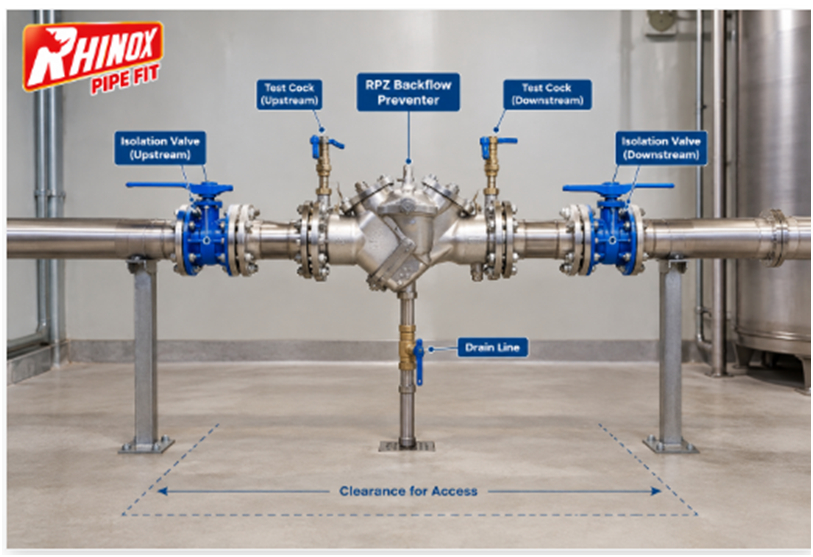
Match the device to the hazard and the pressure condition. Air gaps give the most reliable protection, because no physical link exists. Reduced pressure zone (RPZ) assemblies suit high-hazard points. Double check assemblies suit lower hazards. Vacuum breakers handle backsiphonage only. The EPA Cross-Connection Control Manual lists six basic device types.
| Device | Backsiphonage | Backpressure | Typical use |
| Air gap | Yes | Yes | Tank fills; highest protection where practical |
| Atmospheric vacuum breaker | Yes | No | Low-hazard single outlets |
| Pressure vacuum breaker | Yes | No | Backsiphonage-only risks |
| Double check assembly | Yes | Yes | Low-hazard isolation, such as some fire and boiler lines |
| RPZ assembly | Yes | Yes | High-hazard points with chemical or sewage risk |
Standards classify risk differently. EN 1717:2025 sorts fluids into five categories, and for categories 4 and 5 a single wall is not enough. Always confirm the final device choice against the project specification, NBC 2016 Part 9, and the local authority.
What Should Designers and Installers Check for Potable Water Protection?
Backflow prevention for potable water fails most often at installation and upkeep, not selection. A correct device in the wrong place still leaves the risk open. Check location, drainage, access, and testing before handover. Many codes require periodic testing of testable assemblies, so plan access for the test kit from day one.
What Goes on the Pre-Handover Checklist?
- Confirm hazard rating for every cross-connection on the schematic.
- Check that device size and pressure loss suit the line.
- Provide drainage for RPZ relief discharge, away from flood-prone pits.
- Leave clear access for testing, repair, and replacement.
- Tag each device with location, type, and test record.
- Review pump and valve behaviour, since surges stress check valves.
Surges matter here too. Read the water hammer guide for how pressure events build in commercial risers.
How Does the Pipework Around a Backflow Preventer Matter?
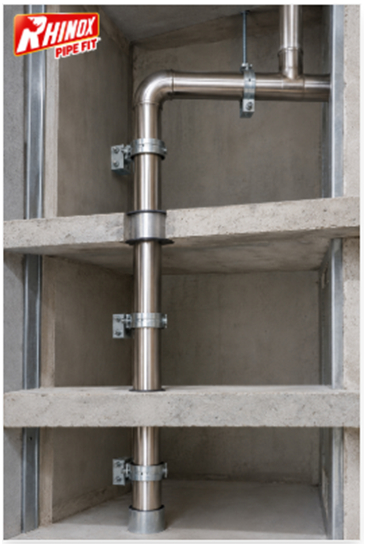
A backflow preventer protects the line, but the pipework feeding it still sets water quality and leak risk. Backflow devices are separate certified products. The pipes and joints around them need to stay clean, secure, and accessible for decades. Rhinox stainless steel pipes are made in EN 1.4404 (316L) grade, in sizes DN15 to DN100, which suits most plant-room and riser connections.
Why Does Flame-Free Jointing Help on Live Buildings?
Adding or replacing assemblies often happens in occupied hotels, hospitals, and offices. Rhinox press fittings are flame-free, which removes hot work from the job. The Triple (VV) Press Fittings use a double O-ring groove with five-stage pressing, and the brand recommends them for concealed and underground runs. Standard runs can use Double (V) Press Fittings. The installation guide covers jointing steps. For fire-water lines, see how stainless steel suits fire-fighting systems, and for water-quality basics read the hygienic water supply guide.
Frequently Asked Questions
What is backflow prevention in plumbing?
It is the set of design measures and devices that stop water flowing backward into the clean supply. It includes removing cross-connections, adding air gaps or backflow preventers, and testing devices regularly.
What is the difference between backflow and backsiphonage?
Backflow is any reverse flow. Backsiphonage is one cause, where supply pressure drops and pulls fluid backward. Backpressure is the other cause, where downstream pressure is higher than supply pressure.
Which backflow preventer is best for high-hazard connections?
An RPZ assembly or an air gap is generally used where chemicals or sewage could enter. The right choice depends on the specification and local authority rules.
Do backflow preventers need testing?
Testable assemblies, such as double check and RPZ types, usually need periodic testing. Frequency and who may test depend on local rules, so confirm with the authority and the manufacturer.
Does pipe material replace a backflow preventer?
No. Pipe material affects hygiene and joint security, but it does not stop reverse flow. Protection comes from air gaps and certified devices placed correctly.
Design Water Safety In Before the Pipes Go Up
Backflow protection works best when it is planned with the piping, not added after a failed inspection. Map cross-connections, match devices to hazards, and keep every assembly accessible. Share your riser layout, plant-room schematic, and device sizes with Rhinox's technical team, or request one-stop service support for your project, and the team can review the piping side with you.
Explore the range: SS Pipes - V-Press Fittings - VV-Press Fittings - Rhinox Press System - System Comparison - Contact