You close a tap, and the pipes bang like a hammer. In a home, that is noise. In a hotel, hospital, or tower, repeated surges strain joints, valves, and pumps. Water hammer in plumbing pipes is predictable, which means it is preventable.
This guide covers what causes it, what it can damage, and how design teams control it.
Quick Answer: Water hammer is a pressure surge that happens when moving water is forced to stop or change direction suddenly, such as when a valve snaps shut or a pump stops. It causes banging and vibration, and repeated surges can stress pipes, joints, valves, and equipment. Prevention comes from design: controlled water velocity, slow-closing valves, non-slam check valves, arrestors near quick-closing valves, and firm pipe supports.
What Is Water Hammer in Plumbing Pipes?
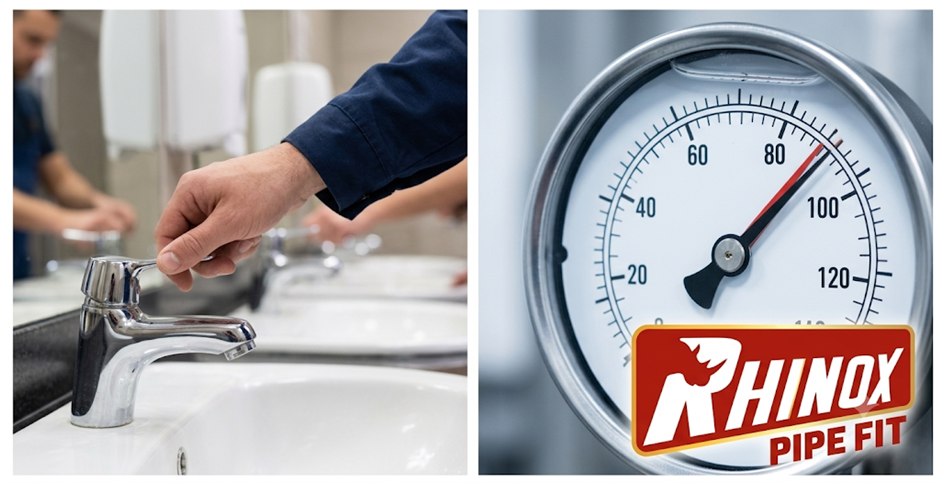
Water hammer is a pressure wave created when flowing water stops suddenly. Moving water carries momentum. When a valve closes fast, that momentum has nowhere to go, so a shock wave travels through the pipe. The wave bounces back and forth until friction drains its energy, which is why you often hear repeated bangs. Engineers estimate the surge with the Joukowsky equation: water density × wave speed × change in velocity.
How High Can Water Hammer Pressure in Plumbing Systems Get?
The surge depends on how fast the water was moving and how quickly it stops.
- Pressure waves travel above 1,000 m/s in stiff, water-filled pipe.
- Some plastic pipes carry much slower waves, below 200 m/s.
- Stopping 1 m/s of flow instantly can add roughly 10 bar.
- That surge adds to the normal static pressure in the pipe.
- Real valves rarely close instantly, so this is a worst-case estimate.
Small changes in closing speed can make a big difference to the pressure your pipes see.
What Are the Main Causes of Water Hammer in Pipes?
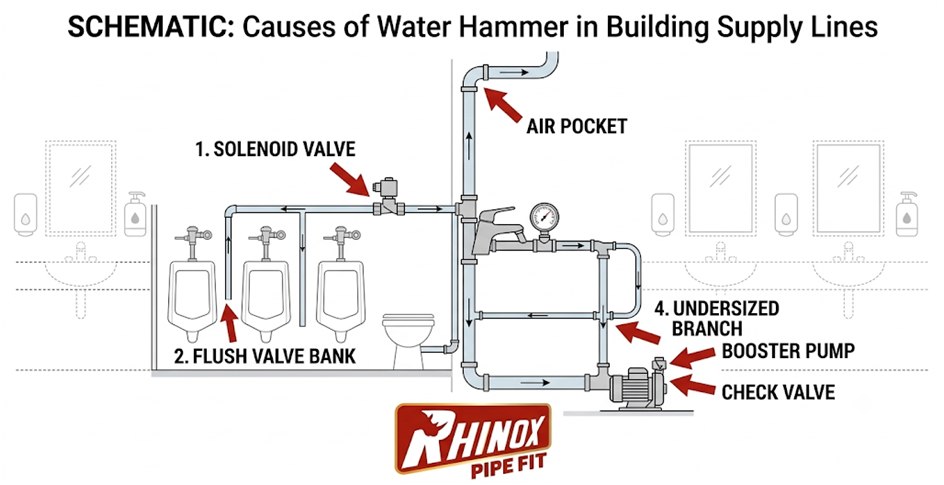
The most common cause is a valve that closes too fast. Other triggers include pump start and stop, check valves that slam shut, high water velocity in undersized pipes, and trapped air. Any action that changes water velocity quickly can start a surge. Most building problems trace back to one of these five sources.
Which Building Components Trigger It Most?
- Solenoid valves in washing machines, dishwashers, and dosing equipment.
- Flush valves and lever taps in busy washrooms.
- Booster pump shutdowns that let check valves slam.
- Undersized branches that push velocity up at peak demand.
- Poor air release, leaving pockets that compress and expand.
Find the fastest-closing device on the line first. It is usually the source.
What Risks Does Water Hammer Pose to Plumbing Systems?
Water hammer causes noise and vibration first. Over time, repeated surges can loosen supports, wear valves, and stress joints. Severe events can burst pipes. The ANSI/ASSE 1010 standard describes surge control as protection for valves, piping, fittings, and appliances, plus noise reduction. In commercial buildings, the real cost is downtime and access.
Where Does the Damage Show Up First?
- Loosened pipe clips, especially at elbows and tees.
- Worn valve seats and failing solenoid or float valves.
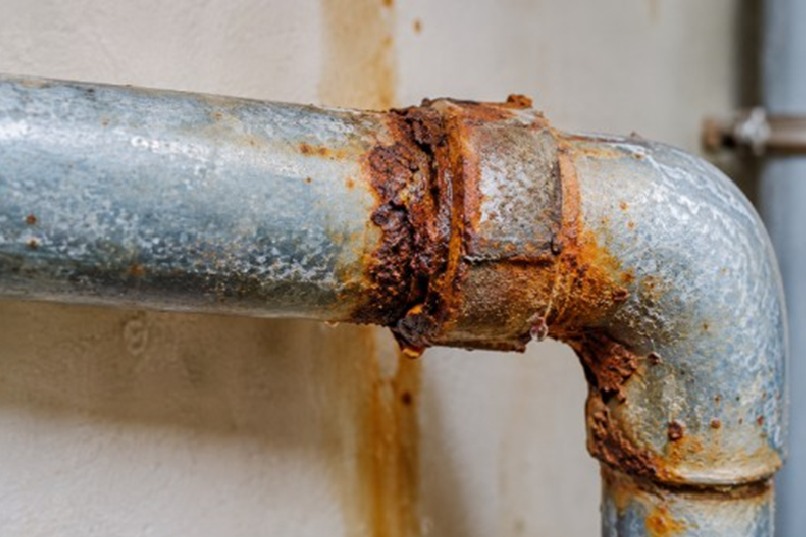
- Weeping joints after years of repeated pressure cycles.
- Damaged appliance inlets and pressure-sensitive equipment.
- Noise complaints from hotel guests, patients, and residents.
Joints hidden in shafts and walls are the hardest to reach. They deserve the most careful design.
How to Prevent Water Hammer in Plumbing
Prevent water hammer by layering controls. Limit water velocity, use slow-closing valves, fit non-slam check valves on pump discharges, and place engineered arrestors close to quick-closing valves. Secure pipes firmly. No single fix works everywhere, so match each method to the cause you found.
| Method | What it does | Watch out for |
| Velocity limits | Reduces momentum in the pipe | Design references often cap domestic supply near 1.5–2.0 m/s; confirm your standard |
| Pressure regulator | Lowers static pressure in the building | Helps, but works alongside other controls |
| Non-slam check valves | Closes before reverse flow builds | Match the valve to the pump duty |
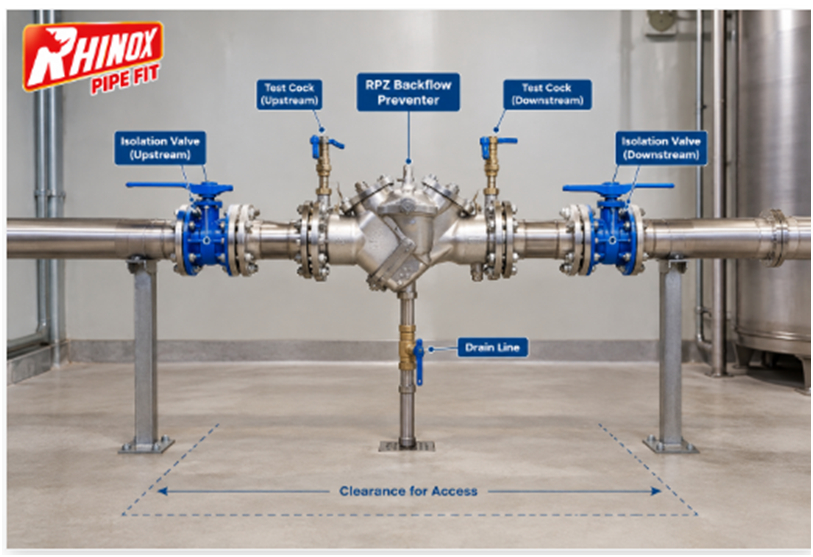
| Engineered arrestors (ASSE 1010 / PDI-WH 201) | Absorbs the shock wave in a sealed chamber | Size to fixture units; place near the fast valve |
| Old-style air chambers | Trap air as a cushion | Air dissolves, and the chamber floods and stops working |
| Pipe supports | Stop pipes moving under surge | Do not remove the surge itself |
Start with the cause, then add protection at the source.
How Does Pipe Design Affect Water Hammer?
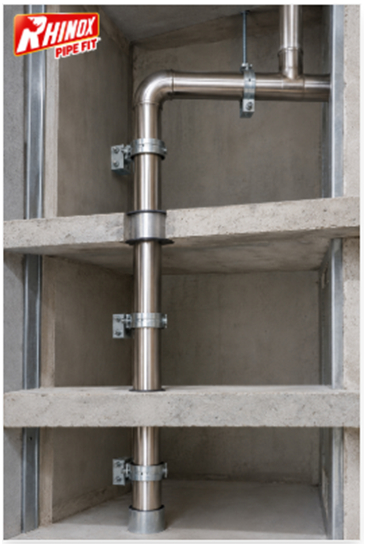
Pipe design shapes velocity, wave speed, and movement. Diameter sets how fast water flows at peak demand. Pipe stiffness and water together set the wave speed. Support spacing controls how much the pipe moves. Material alone does not prevent water hammer, so surge control is a design job on every project. What the pipe system can add is joint security under repeated pressure cycles.
Rhinox Triple (VV) Press Fittings use a double O-ring groove and five-stage pressing. The brand lists tensile strength above 520 N/mm² and recommends them for concealed and underground runs. They pair with Rhinox stainless steel pipes in 316L (EN 1.4404), sizes DN15 to DN100. This gives a secure base, not a replacement for arrestors and valves.
What Should Specifiers Check?
- Calculate peak-flow velocity for every riser and branch.
- Confirm working-pressure ratings of pipes and fittings, including surge allowance.
- Fix clips at elbows, tees, and valves per supplier guidance.
- Specify arrestors at quick-closing valves and flush valve banks.
- Review booster pump start, stop, and check valve selection.
- Request a formal surge analysis for large booster sets.
Read the press fit installation guide for jointing steps, and compare options in the stainless steel fittings guide.
Why Does Water Hammer Matter for Commercial and High-Rise Projects?
Commercial buildings combine many fast valves, long risers, booster pumps, and concealed shafts. Access is limited, so problems are slow and costly to trace. Planning surge control at the specification stage is usually easier than diagnosing banging in an occupied building. Rhinox offers technical support and free circuit design assistance for installers and specifiers, through its support team and one-stop service.
Share your riser layout, pump details, and fixture load. The team can review the piping side of your design with you.
Frequently Asked Questions
What causes water hammer in pipes?
Sudden changes in water velocity. Quick-closing valves, pump stops, slamming check valves, high velocity, and trapped air are the usual causes.
Can water hammer damage pipes?
Yes. Repeated surges can loosen supports, wear valves, and stress joints. Severe events can burst pipes, especially where design margins are thin.
How do you stop water hammer?
Find the trigger, then combine controls: lower velocity, slow-closing valves, non-slam check valves, engineered arrestors, and firm pipe supports.
Do water hammer arrestors work?
Yes, when sized and placed correctly near the quick-closing valve. Old air chambers lose their air over time and stop working.
Does pipe material prevent water hammer?
No. Material affects wave speed and strength, but surge control still depends on velocity limits, valves, arrestors, and supports.
Plan Surge Control Before the Pipes Go In
A quiet, durable plumbing system starts with design choices made before installation. Control velocity, protect against fast valves, support the pipework, and choose joints built for concealed runs. Talk to Rhinox's technical team about your project.
Explore the range: SS Pipes - V-Press Fittings - VV-Press Fittings - Rhinox Press System - System Comparison